By Gary Symons
TLL Editor in Chief
A new food marketing program in the United Kingdom called ‘Jab-uary’ is highlighting major changes in the food and beverage industry, due to the rising popularity of GLP-1 weight loss drugs.
It’s also a trend that demands attention from the licensing industry, as major players are quickly signing deals to launch new food and beverage products that meet the needs of GLP-1 users.
“There’s a revolution underway in food and it’s being driven by something you won’t find in the grocery aisle or on a restaurant menu,” writes Anne Palermo, a writer-researcher for the Food Institute. “Demand for GLP-1 medications like Ozempic and Wegovy have exploded in popularity thanks to their effectiveness in supporting weight loss. As millions of Americans embrace these drugs, we’re witnessing a category-defining shift in how and what people eat.”

Palermo adds, “The food industry is scrambling to keep up,” as manufacturers and retailer rush to launch new product lines.
At the same time, marketing is changing to align with the weight-loss craze, including the Jab-uary campaign that is sweeping the UK food industry right now.
Marks & Spencer, Morrisons, Asda, Ocado and the Co-op are among the big names targeting British shoppers who use weight-loss injections, known as GLP-1 agonists.
“For customers using these products, we’re seeing more of that switch into healthier choices, into fresh food, into fibre,” said Sainsbury CEO chief Simon Roberts.
According to the British newspaper The Guardian, Ocado’s new virtual “weight management” aisle includes a “curated range of GLP-1-friendly products” that runs the gamut from tiny 100 gram (roughly 3.5 ounce) portions of steak costing £3.50, to a “powdered greens” supplement, called AG1, at £107 a pack.
The online supermarket says there’s strong demand for protein-rich staples such as steak, chicken, cottage cheese, health drinks, fibre-rich foods, and vitamins and supplements that support health and weight loss.
The trend has resulted in a tsunami of licensing opportunities for savvy companies that were able to quickly adapt to the change in consumer buying habits.
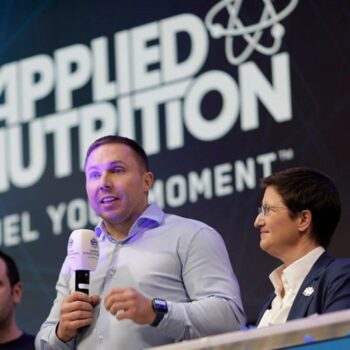
One example saw Morrisons, the fourth-largest supermarket in the UK, partnering with Applied Nutrition on what is seen as a landmark licensing deal. The partners have launched 53 new high-protein products, including the UK’s first GLP-1 friendly supermarket ready meals.
The three-year exclusive licensing deal with Applied Nutrition allowed Morrisons to become the first UK supermarket to launch a dedicated range of GLP-1 ready meals. Under the agreement, Morrisons will formulate, produce and sell Applied Nutrition-branded meals and food products. The first wave launched across more than 400 Morrisons stores nationwide in early January … or, in this case, Jab-uary.
“We’re excited to be partnering with Morrisons for our first out-licensing deal, a testament to the strength of our brand and the growing consumer demand for convenient, high-protein food choices,” said Applied Nutrition CEO Thomas Ryder. “This is a great opportunity to reach new audiences and enable existing customers to deepen their engagement with our brand.
“We’ve enjoyed working with Morrisons, combining their expertise in food development with our deep customer understanding to create a unique product range designed to support people in achieving their wellness goals.”

The changes to food consumption isn’t just happening in the UK, obviously; it’s a global phenomenon that is seeing the largest players in food manufacturing jump onto the bandwagon of GLP-1 oriented food products.
Millions of people are now using weight-loss drugs like Ozempic and Wegovy, so the demand for high-protein meals and fiber-rich snacks is rising. A recent study found that over 9 million U.S. adults now take GLP-1 medications, which is changing how they eat and shop.
The reason for these huge changes in consumption is based on how the medications work.
GLP-1 receptor agonists, including Ozempic, Wegovy, and Mounjaro, were originally developed to manage diabetes, but they also promote weight loss because they slow digestion, reduce cravings, and increase feelings of satiety, or, in other words, you feel like you’re full after eating much less food.
As a result, people taking these medications eat less, are less interested in sugary or salty snack foods, and tend to focus on nutrient-dense foods that keep them fuller longer. This has driven the demand for appetite-suppressing diets, where high-protein meals and fiber-rich snacks are preferred.
Brands like Conagra, Nestlé and Supergut are now meeting the demand by introducing new products to support appetite control and balanced nutrition.
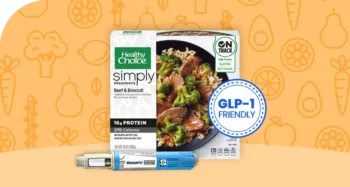
Conagra was among the first major food companies to launch a GLP-1-friendly foods label, which debuted on 26 newly developed Healthy Choice frozen meals, which are high in protein, rich in fiber, and portion-controlled. Healthy Choice has typically focussed on those types of meals; the major change is in how those benefits are being communicated to consumers.
Nestlé not only launched new product lines, but also unveiled a dedicated website for GLP-1 users in 2024 to guide consumers on the best diet for weight loss and controlling diabetes symptoms.
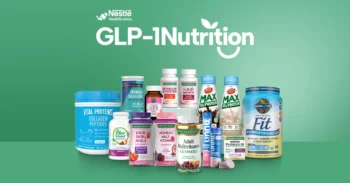 The new website, www.glp-1nutrition.com, serves as a hub for nutritional support of individuals on a weight management journey, including those on GLP-1 therapy. It offers nutrition information and a wide range of product options to support the unique nutritional needs of individuals on this treatment. In addition, glp-1nutrition.com offers expert nutrition insight, product bundling, and convenient.
“The launch of this new innovative tool marks an important step forward in the mission and focus of our business,” said Nestlé Health Science CEO Anna Mohl. “With this offering, we reaffirm our commitment to empowering healthier lives through targeted, personalized nutritional solutions. We are excited to continue redefining health and wellness solutions and enhancing the quality of life for those seeking effective weight management strategies.”
The food brand Supergut is taking a different approach, as it focuses on prebiotic fiber to help consumers naturally boost their GLP-1 levels. Supergut produces nutritional shakes, bars, and GLP-1 Boosters that are designed to curb cravings, stabilize blood sugar, and support gut health.
Fiber intake is closely linked to increased GLP-1 production, and for people who are not taking the weight-loss drugs, increasing consumption of foods high in prebiotic fiber is an effective way to lose weight in itself, which is just amplified by using GLP-1 injections. Essentially, Supergut is out to show that food-based solutions can work alongside the pharmaceutical solutions, or instead of them.
The food and beverage research company Tastewise recently released the GLP-1-Friendly Foods & Weight Management Trends report, based on consumer survey data, that provides insights into what people are looking for when choosing products that support their health goals.
Among the most important results, Tastewise found that:
- 92.65% of respondents take GLP-1 medications primarily for weight management.
- Consumers associate GLP-1-friendly foods most with beverages (69.48%) rather than plant-based meals or desserts.
- Prebiotic and gut health benefits (60.17%) rank higher than protein (26.17%) as a priority for weight management.
- 50% more consumers prefer to buy these products online over traditional grocery stores.
- Price is a major concern—61.58% of respondents say GLP-1-friendly foods tend to be more expensive.
A year-old study from the Cornell SC Johnson College of Business Research (January 2025) indicates that the impact of weight loss drugs will grow over time as adoption increases.
That study found that GLP-1 drug adoption increased from an estimated 5.5% of the U.S. population in October 2023 to 8.3% in July 2024. It’s also worth noting that these drugs are relatively new, and the rate of adoption is increasing, and the market value of GLP-1 drugs is expected to double by 2030.
If that plays out as expected, Lourival Monaco, a Research Assistant Professor and research manager at Purdue University’s DIAL Ventures, says it will result in a lasting decline in food purchases, as the study found that “households with at least one GLP-1 user reduced grocery spending by approximately 5.5% within six months of adoption.

“In financial terms, with an average monthly grocery spend of about $630, this 5.5% decline corresponds to a $416 reduction in annual food purchases for each household,” Monaco noted. “Higher-income households, earning over $125,000, cut their grocery spending by 8.6%, equating to an annualized decrease of $690 – more than double the 4.2% decline ($270 annually) observed in households earning less than $125,000.”
It’s also worth pointing out that the drop in food spending impacts some categories more than others. The biggest drops in spending impacted on ultra-processed, calorie-dense items like chips, savory snacks, sweet bakery goods, side dishes, and cookies. For those items, reductions ranged from -11.1% to -6.7%.
The challenge for food producers then is to create products that support the weight loss and health objectives of GLP-1 users, creating higher valued items that command higher prices while at the same time providing value to the consumer.
In TLL’s view, that is exactly the opportunity presented to the licensing industry, which excels at combining the strengths of multiple companies to produce new and compelling products that meet a trending need.