After three years of explosive growth, Compañia Panamericana de Licencias is betting the region’s cultural moment will carry it even further
By Gary Symons
TLL Editor in Chief
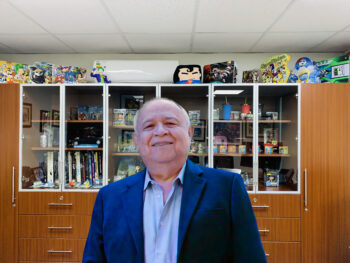
Luis Salazar has spent more than four decades watching Latin America’s licensing industry evolve, and says the growth happening right now is unlike anything he has seen before.
Better yet, the company he leads is at the epicentre of that growth.As CEO of Compania Panamericana de Licencias, the region’s leading licensing, promotions and location-based entertainment agency, Salazar is seeing revenue numbers that would turn heads in any industry. From 2022 to 2023, CPL’s revenue grew by an astounding 72%. The following year brought another 48% increase.
“Sure, when you see those numbers you think, holy cow, that’s a lot,” Salazar says. “But part of it was due to some consolidation in the market during COVID, when companies realized they needed more help, and turned to us as the company with the most boots on the ground all over Latin America.”
 However, while 72% growth is pretty much impossible to sustain year after year, CPL continues to exceed any reasonable expectations as it continues posting double-digit revenue numbers.
In 2025, the company posted 39% year-over-year growth. Salazar says he expects CPL to exceed 30% growth again in 2026 and in the years beyond, even as uncertainty clouds the broader global economy.
The pandemic-era consolidation gave CPL an opening, but Salazar is clear that sustaining that trajectory is a realistic goal he is determined to achieve.
“Our first priority is growth, and we are very specific about this,” Salazar says. “Our goal is to grow the business by a minimum of 30% per year. That means expanding into new categories, developing new program types including experiential licensing, and continuing to open opportunities that did not previously exist in the region.
“Second is helping our clients generate new business,” Salazar adds. “This is something we are particularly focused on; using events and activations as a tool to connect our licensors with new potential partners in the region. It is not just about managing existing programs; it is about actively expanding the ecosystem for our clients.
“Third — and this is perhaps the most important — actively positioning CPL and Latin America as sources of licensing, promotions, and location-based innovation for the global industry. The cultural moment this region is experiencing is real and significant. We intend to make sure the global licensing community understands and benefits from it.”
Salazar says CPL is leading growth in the red-hot Latin American market because it takes a highly tactical approach to the industry.
“We do not manage licenses,” he says. “We build licensing strategies and that distinction matters.
“Managing a license is administrative work; it’s about approvals, royalties, and compliance, but building a licensing strategy means understanding the cultural trends, analyzing consumer behavior, anticipating market opportunities, and constructing programs that have relevance today and project well into the future.
 “In practice, this means we invest heavily in understanding both sides of the collaboration before any program is designed,” Salazar explains. ”What does the licensee need to achieve? What does the brand owner need to protect and grow? What does the consumer in this specific market actually want right now?
“From those questions, we work backward. Which properties make sense, which categories are the right fit, which commercial structures align everyone’s interests? And then we stay active throughout execution. We are not passive administrators of a contract. We are partners in the outcome.”
In addition to strategy, Salazar says relationship management is another key to successful collaborations, and it’s something CPL works hard to achieve in every program. “When all parties — licensor, licensee, retailer, agency — are genuinely invested in the success of the program, the quality of decisions improves,” Salazar says. “And so do the results.”
After 46 years in the licensing industry, Salazar says he can boil success down to three elements that consistently separate strong programs from exceptional ones: Genuine market intelligence, creative courage, and operational discipline.
The first element requires understanding not just what consumers are buying today, but why, and where they are headed.
The second means finding an unexpected but truthful intersection between a brand and a cultural moment.
The third means staying active through retail, sell-through and every stage that determines whether a program actually delivers on its promise.
CPL’s recent case portfolio illustrates each of those principles in action.
The Batman Football Jersey That Became the Most Popular in the World
 One striking example of CPL’s methodology at work involves a football jersey.
In late 2025, Deportivo Saprissa — a Costa Rican football club known across Central America as “El Monstruo Morado,” or The Purple Monster — became the first club in the world to launch a kit fully inspired by the DC superhero Batman, developed in collaboration with Warner Bros. Discovery.
The jersey was subsequently voted the best football jersey in November 2025, ranking ahead of national team kits from countries including Germany.
The success, Salazar said, was rooted in a strategic insight that went well beyond the visual design, and told a story fans could identify with.
“Saprissa is known across Central America as ‘El Monstruo Morado’ — The Purple Monster — a protector of its city, and Batman is a protector of his city,” Salazar explains. “That connection was not superficial. It was real, and consumers felt it.
“The design was also exceptional; it worked as a football kit and as a fashion piece simultaneously. That dual appeal is what allowed it to travel far beyond the typical audience for Costa Rican club football.”
The campaign demonstrated the property’s credibility in the world of sport and expanded its perceived versatility well beyond entertainment. Saprissa opened conversations in sponsorship, merchandise programs and sales channels that had not previously been accessible. “That kind of credibility has long-term value that goes well beyond any single collection,” Salazar says.
The Experiential Opportunity in Latin America
CPL’s partners have had plenty of reasons to be happy with their Latin American licensing agency, as CPL also guided the successful launch of a number of location-based entertainment destinations.
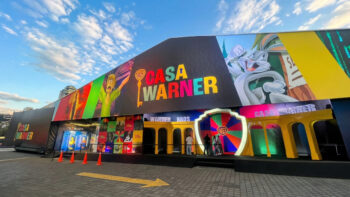
Salazar says location-based and experiential entertainment make up one of the fastest-growing licensing categories in the region, and one of the companies making noise in that space is Casa Warner.
Located in Quito, Ecuador, Casa Warner is a multi-space immersive destination completely built around Warner Bros. franchises like Harry Potter, DC Comics, Looney Tunes and Scooby-Doo. Visitors move through themed environments, interact with the spaces and share the results across social platforms.
Salazar describes it as a genuine cultural destination that now draws tourism and generates sustained brand affinity for Warner Bros. in a market that previously had very few activations of this kind.
CPL’s contribution was both the strategic licensing framework — ensuring all franchises were properly authorized and consistently executed — and the local market knowledge that made the concept commercially viable, from pricing the experience appropriately to building the retail component and positioning it for sustained traffic.
“Once consumers experience what it feels like to step inside a world they love, they want more of it,” Salazar said. “The appetite has proven more durable than many expected.”
In Mexico, Sonic Fast Dogs takes the SEGA license into an entirely different territory: a food truck experience in Monterrey where Sonic the Hedgehog’s universe — characters, speed, energy — translates directly into a branded consumer moment, with official merchandise and plans to expand across the country.
KOAJ DTR Fashion Program With Warner Bros.: More Than Just Characters on a T-Shirt
A third successful Warner Bros project resulted in a major boost for both the studio and its Colombian fashion partner KOAJ. Salazar says a major reason for the success is that both parties were committed to a long-term, highly collaborative strategy.
“There’s a lot more to a successful licensing strategy than putting a brand or a character on a T-shirt, and that distinction is really at the heart of everything we do at CPL,” he argues. “A logo on a product is the beginning of a conversation, not the end of one. A truly successful licensing program starts with a real strategic question: does this brand genuinely connect with the consumer we are trying to reach? Is there cultural fit? Does it make sense for the category and for the moment?
 “From there, the execution has to honor both sides; the integrity of the licensed brand and the commercial ambition of the licensee, and then you have to think beyond the first season,” he adds. “The programs we are most proud of at CPL are the ones that opened new categories, built new audiences, and created long-term competitive advantages for our clients.”
CPL invested significant time and effort understanding KOAJ’s customer and aesthetic before identifying which Warner Bros. properties would connect authentically with that audience, ultimately developing a program integrated into KOAJ’s brand identity rather than layered on top of it.
“The commercial results have been strong, but what we are most proud of is what it did for KOAJ’s positioning,” Salazar says. “Working with our partners at that level signals something to the market; to retailers, to competitors, and to consumers. That kind of credibility has long-term value that goes well beyond any single products collection.”
Batteries, Sonic, and Category Disruption
Salazar says another lesson he’s learned in the licensing industry is to think outside the box, and to look for opportunities in unlikely categories. One example was a highly successful campaign between SEGA’s Sonic the Hedgehog character and the Latin American battery company Elgin.
 “The Elgin campaign is one of those cases that perfectly illustrates why category-conventional thinking limits licensing opportunities,” Salazar says. “Batteries are a mature, commoditized category. Differentiation on product attributes alone is very difficult, and consumer engagement at a brand level tends to be minimal. The insight behind the Elgin-Sonic collaboration was precisely this: what if a brand in this category used licensing not just as a promotional mechanism, but as a genuine platform for consumer connection?”
Elgin and CPL saw that Sonic’s associations with energy, speed and power mapped naturally to the battery brand, which added designs from Sonic to packaging and created a successful new line of Sonic batteries.
“The campaign performed strongly across television, retail and digital channels, and demonstrated,” Salazar says. “It’s a principle CPL applies consistently: When licensing is brought to an unexpected category with real strategic logic behind it, it tends to significantly outperform.”
The Latin American Moment
Underlying CPL’s growth ambitions is a conviction that the region is experiencing something historically significant — and that the global licensing community has not yet fully grasped what it means.
“What is happening with Latin American culture right now is genuinely significant, and I say that after more than four decades of watching this region evolve,” Salazar said. “Latin music is not merely reaching global audiences; it is shaping global taste. Latin American television and film storytelling is finding audiences well beyond the region, and a generation of consumers in the market now has a strong, assertive sense of cultural identity that expects to be reflected in what they buy.”
Latin American music has exploded across the global stage, while locally produced television series and films are now aired around the world.
Salazar says that creates opportunity in both directions for global licensing professionals. Global brands need local partners who understand what genuinely resonates in this cultural moment versus what feels imported and disconnected.
On the other hand, Latin American properties — sports clubs, music brands, entertainment franchises — are increasingly viable licensing platforms for global markets. The Saprissa Batman jersey is one example of the latter, and Salazar expects more to follow.
“At CPL, we have been positioned in this market long enough to help both directions happen,” Salazar points out. “That is one of the things that makes this moment particularly exciting for us.
The categories showing the strongest current growth, he said, include apparel and fashion, location-based entertainment, collectibles and, notably, two that are often overlooked: beauty and personal care, and pet products. Both categories carry a high degree of emotional purchase investment among consumers, Salazar said, which makes licensed brands especially powerful in them.
He also pointed to the rapid expansion of licensing into non-traditional consumer goods categories — food and beverage, personal care, household products — as a trend with significant runway in Latin America, driven by manufacturers in mature categories discovering what brand differentiation through licensing can do for consumer engagement.
As a proud Latin American company, Salazar says one of the top priorities of his team is to position CPL and Latin America itself as sources of licensing innovation for the global industry.
“The cultural moment this region is experiencing is real and significant,” he said. “We intend to make sure the global licensing community understands and benefits from it.”
Goals for Licensing Expo: Quality Over Volume
CPL will be bringing that message to the upcoming Licensing Expo 2026 trade show, where the company will be prioritizing “quality of conversation over volume of meetings.”
 Salazar says the company’s primary objective is to advance discussions with global brand owners that are serious about the Latin American market but have not yet found the right model for activating in it.
“There is no shortage of brands that recognize the region’s potential,” he explains. “What is less common is brands that have the strategic patience and the right local partner to realize it. Those are the conversations we want to have.”
CPL will also be looking at emerging category opportunities where consumer demand in the region has not yet been matched with strong licensing programs, and exploring ways to deepen and expand existing client partnerships into new territories or categories.
“We are coming to build,” Salazar said. “Not to collect business cards, but to have the conversations that lead to programs we will both be proud of years from now.
“The companies that treat licensing as a strategic discipline — not a shortcut — are the ones that will benefit most from what is coming,” he adds. “CPL intends to be right there with them.”
CPL will be attending Licensing Expo 2026 in Las Vegas, and can be reached for appointments on the Licensing Expo matchmaker platform. ■