By Gary Symons
TLL Editor in Chief
Counterfeit goods have always been the dark underbelly of the licensing industry. From fake Disney merchandise to knockoff handbags and collectible toys, illicit products drain billions from legitimate companies while eroding consumer trust.
The challenge has grown more complex in recent years as counterfeiters leverage global e-commerce, social media trends, generative artificial intelligence (AI), and even a new cultural phenomenon known as “dupe culture.”
For licensing executives like Octane5 co-founder Mike Dunn and EVP, Product Authentication Bill Patterson, the problem isn’t just a legal or financial issue; it’s existential.
“When someone buys a counterfeit product, they’re not just taking money away from a brand,” Dunn says. “They’re often putting themselves or their kids at risk, and they’re undermining everything that licensing stands for: safe, ethical, authentic products.”
That’s why Octane5 has taken an unorthodox approach, one they believe will redefine the way the industry thinks about brand protection.
Instead of relying solely on the traditional top-down model of customs enforcement and corporate investigations, they’re turning the process upside down and adding a powerful new layer of protection, which is crowd sourcing brand protection through consumer engagement.
The Counterfeit Crisis in Licensing

The scale of the problem is staggering. The OECD estimates that counterfeit and pirated goods account for more than 3% of global trade, representing hundreds of billions of dollars annually. In the licensing sector, where brand equity is everything, the impact can be devastating.
“What makes licensing different is that the product is the brand,” says Patterson. “Whether it’s a university logo on a sweatshirt, a character from a film on a toy, or the name of an automaker on apparel, people are buying the brand itself. If the consumer can’t trust that brand to be authentic, the entire licensing model is threatened.”
Patterson notes the challenge is now further complicated by shifting cultural attitudes. On social media platforms like TikTok and Instagram, “dupe culture” has taken off. Influencers proudly share knockoffs of luxury handbags, designer sneakers, or popular collectibles, pitching them as clever alternatives to the originals.
Dunn admits the trend has been frustrating. “You’ll see TikTok videos where someone says, ‘Look at this amazing dupe purse I found on Amazon!’ And they say it like it’s a good thing,” he explains. “But a dupe is just a nice way of saying counterfeit. Calling it a dupe doesn’t make it any less harmful. It’s still unregulated. It’s still potentially unsafe. And it still robs the brand—and by extension, the consumer—of value.”
That’s not just rhetoric. Earlier this year, for example, UK customs officials seized a shipment of counterfeit Labubu dolls, a hot collectible in both Asia and North America. Tests subsequently revealed the dolls were made with toxic chemicals unsafe for children.
“That’s why this is not a victimless crime,” Patterson stresses. “Parents thought they were saving money. In reality, they were putting their kids in danger.”
From Enforcement to Engagement
Traditionally, brand protection has been an enforcement-driven process. Companies use solutions like those provided by Octane5 to detect counterfeits, and work with law enforcement, customs agencies, or private investigators to identify the counterfeiters and shut down illegal production.
That remains a vital part of the brand toolbox when it comes to protecting IP, and Octane5 is a world leader in that space. While some competitors are betting heavily on artificial intelligence to help detect counterfeit products, Dunn warns that going down that path is a never-ending game of wack-a-mole, since counterfeiters can also use AI to quickly change their production methods.

Instead, Dunn says using micro-optic protection methods on tags remains the most powerful tool in the brand and IP protection toolbox.
“We use this technology because it’s not commercially available,” Dunn points out. “People can’t make it. It’s why the US government is hanging its hat on micro-optics, and it’s why we hang our hat on micro-optics, because the one thing that nobody else can do, even with AI, is to simulate and recreate this technology.
“At the end of the day, you need something that is your demarcation that says, ‘this is the real thing’, or ‘no, this is a counterfeit’, and right now, there is no other technology out there that can’t be spoofed by the counterfeiters.”
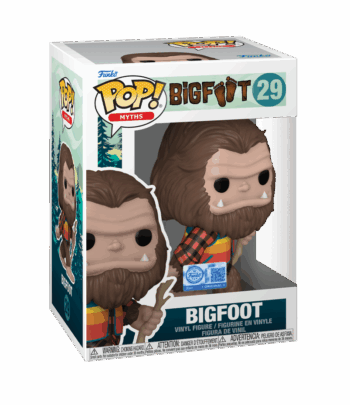
Smart brands like Funko, an Octane5 client, combine their use of micro-optics with marketing that makes the consumer very aware of how their use will authenticate the product as the real thing. That is now combined with the technology inside BrandComply software to collate that data, and use it to both help with product marketing, but also to help catch the bad guys.
“You take a brand that gets hundreds of thousands of consumers scanning these tags a year, and each of these interactions becomes a data point on the map,” Dunn explains. “So now, I know exactly where that scan occurred, I know what type of product that was scanned, so as we start to look at that data—and this is where AI is coming into play for us -we can determine that a half of 1% are problematic scans: It’s either diverted product or a duplicate number sequence.
“Then I can compare that across all my brands and say, “Okay, there’s a pattern happening here where we’re finding diverted product, but it’s a common theme because it’s mainly in this region, involving these distributors or shippers, and it’s involving these particular products.
“Thanks to our new crowdsourcing technology, that gives us some actionable data that our AI can analyze, and at the end of the day you have evidence that can help you or help law enforcement track down the bad guys when things start falling off the back of the truck a little too often to be coincidence.”
Patterson says that helps investigators pinpoint the areas they need to look at in pursuit of counterfeiters.
“Our industry’s legacy approach has always been top down,” Patterson explains. “The brand owner is responsible for training law enforcement, working with customs, and driving enforcement globally. But in today’s market, with global e-commerce and informed consumers, that model is outdated. We needed something more efficient.”
The more efficient alternative, he says, is this new bottom-up crowd-sourcing model that enlists consumers directly in the fight.
Essentially, the company’s system uses secure authentication labels embedded with unique serial numbers. When a consumer purchases a product, they can scan the label with their smartphone to validate it. That simple action accomplishes three things at once: It confirms authenticity, it provides valuable consumer engagement, and it generates data that helps brands track where legitimate and counterfeit products are circulating.
“We’ve always called it marketing-based security,” Dunn says. “It’s not just about checking if something is real. It’s about creating another touchpoint for the consumer, making the authentication process fun and engaging, and at the same time gathering intelligence that helps the brand protect itself.”
Secondarily, the technology also allows brands to better understand who and where their customers are, and to be able to interact with them far more effectively.
“Now, as the consumer starts to interact, we’re getting really valuable, actionable marketing intelligence for the brand to learn about their consumers and connect even more,” he explains. “So, there is a whole back-end side to this too for the brand owners to be able to take advantage of a crowd-sourcing type solution not just for enforcement, but for engagement as well.”
Gamifying Trust
To encourage participation, the system can be used to reward consumers for scanning. After verifying a product, users might be invited to complete a quick brand survey, enter a sweepstakes, or unlock loyalty points. Some brands even offer scratch-and-win digital games tied to authentication.
“We’ve really leaned into gamification,” Dunn explains. “If you can make the process fun, consumers are much more likely to do it. And every time they scan, they’re reinforcing the idea that authenticity matters. They’re also giving the brand direct feedback on quality, perception, and market trends.”
This dual function—security plus marketing—is why Dunn calls the strategy “a win-win.” Not only does it strengthen brand protection, but it also creates a unique opportunity for consumer engagement.
“It’s something brands don’t typically get with traditional sales channels,” he adds. “Now, when someone buys a Funko Pop or an Ohio State hoodie, they’re not just making a transaction. They’re entering into an ongoing relationship with the brand.”
Ethics, Transparency, and the Next Generation
While the system provides a practical way to fight counterfeiting, Dunn and Patterson emphasize that its real power lies in storytelling. Today’s consumers—particularly millennials and Gen Z—are more concerned than ever with where their products come from and how they’re made.
“Generationally, the audience has shifted,” Patterson says. “Gen X maybe didn’t care as much. But younger consumers demand transparency. They want to know whether their cotton was ethically sourced, whether child labor was used, whether the product is sustainable. If you can’t answer those questions, you’ll lose them.”
That’s where authentication becomes more than a security check. By integrating storytelling into the scan experience, brands can communicate their values directly to consumers.
“When you scan and authenticate, you might also see a message about how the brand ensures safe labor practices, or how proceeds go to scholarships or philanthropic projects,” Dunn explains. “Weaving those stories into the authentication process makes the consumer feel good about buying authentic. It turns a compliance tool into a marketing opportunity.”
As counterfeiters grow more sophisticated, industry experts agree that enforcement alone will never be enough. What Dunn and Patterson propose is not just a technology but a mindset shift; one that integrates security, marketing, and ethics into a single consumer experience.
“We’re not naïve,” Dunn says. “Counterfeiting will never go away completely, but if we can make authenticity fun, if we can make it rewarding, if we can show consumers why it matters, then we’re changing the game. We’re building loyalty while protecting brands. That’s the future.”
For the licensing industry, which has long struggled with counterfeit challenges, the model offers a glimpse of a new equilibrium, one where consumers aren’t just victims of counterfeiting but active partners in the fight.
“It’s about turning brand protection into a brand asset,” Patterson concludes. “And that’s something every licensing executive should be paying attention to.”