
By Gary Symons
TLL Editor in Chief
Simon Kay has spent more than three decades watching the licensing industry move at what can sometimes feel like a frustratingly glacial pace. Now, as owner of the Layer Licensing Marketplace, he is doing something about it.
Layer is a collaborative marketplace and service platform that connects intellectual property owners, video game developers and licensing agencies, helping them find each other, structure deals and bring branded content to life across games and interactive platforms.
Part of the wider AT New Media licensing services offering, Layer uniquely sits at the intersection of technology and the traditional handshake business that has defined IP licensing for generations.
 “This has been the art of the licensing industry for decades,” Kay said, “so embracing technology doesn’t mean we’re changing the process.”
That philosophy — evolution without abandonment of core principles — defines much of what Layer is trying to accomplish. The platform functions as what Kay calls a “complementary tool” for licensors, agents and developers, one that can plug into a client’s existing strategy at any point in the deal cycle rather than replacing it wholesale.
Whether a partner wants to be deeply hands-on or largely hands-off, Kay says Layer can flex to meet them where they are.
Four Phases of IP Licensing From One Pipeline
 Kay frames Layer’s value proposition around what he describes as four critical phases of successfully licensing intellectual property into the video game market: ideation, search, proposal creation and commercial closure.
“To us, there are four key phases when it comes to the process of successfully licensing IP into this market,” he said. “We can integrate and collaborate as part of your strategy on all of them.”
The marketplace itself — where developers, IP owners and agencies can browse and connect — is one component of that. But Kay is quick to point out that the matchmaking technology is only part of the picture. It is the surrounding support infrastructure, the human layer that helps move conversations toward signed deals, that he believes differentiates Layer from a growing field of tech-based competitors.
“The online marketplace in itself is one part of that, but it’s our wider support service to help make things happen which enables us to progress opportunities,” he said.
Recent activity on the platform bears that out. Layer has concluded partnerships on platforms as diverse as Roblox, console and online slots, and Kay says the company has been actively expanding its roster of IPs while refining its matchmaking capabilities. Most of that work, he acknowledges, has been happening under the surface.
“Although things might not look substantially different on the outside, we’ve been making improvements on the inside,” he said. “You’ll see a lot of new IPs, enhanced matchmaking, and more partnerships formed.”
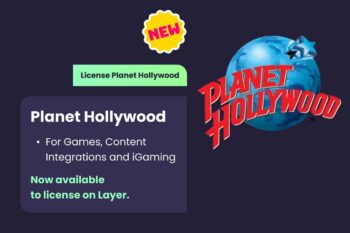
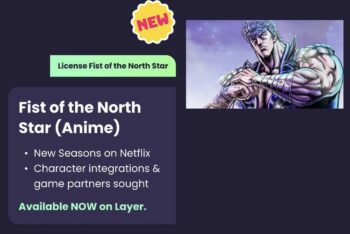
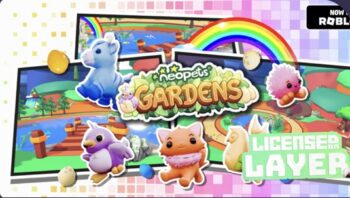
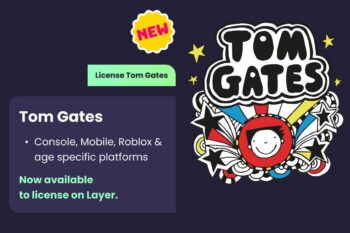
The types of IP appearing on Layer Licensing is widely varied, and includes everything from manga series like Fist of the North Star, animated series likeWinx Club, hospitality companies like Planet Hollywood, and, of course, games like NeoPets.
Patience Over Deal Volume
If there is a governing principle behind Layer’s current strategic posture, it is restraint. In an industry that often prizes growth at scale, Kay has taken a deliberately measured approach to building out the platform’s partner base.
“We’re not looking for a volume of partners to just join the marketplace,” he said. “We’re focused on delivery for what we do have.”
In other words, Kay believes that closing deals is more important than simply listing IP. It’s a stance informed by his direct experience. Kay’s 30-plus years working in the licensing sector have given him a clear-eyed view of what happens when platforms prioritize sign-ups over outcomes. The result, more often than not, is a marketplace full of listings and short on transactions.
“Less is more is a term often misused,” he said. “But, in our present state, delivering on what we have and improving routes to market for what’s on board — and what is to come — is often more important than chasing new opportunities all the time.”
That patient approach extends to how Layer communicates with its partners. Kay says the company has deliberately softened and recalibrated its messaging to be “supportive of strategies on all sides of the marketplace,” adjusting commercial terms accordingly to reflect the different needs of developers, IP holders and agencies at various stages of their licensing journey.
The Speed to Market Problem in Licensing
For all of Kay’s emphasis on steady, sustainable progress, he is anything but complacent about the structural inefficiencies that plague the broader licensing industry. Chief among them is speed to market.
The process of identifying an IP opportunity, aligning the relevant parties, negotiating terms and closing a deal remains painfully slow, he says, and that problem is only going to become more acute as audience attention cycles shorten and content demand accelerates.
“It’s still too slow and that’s industry-wide,” he said. “We want to be part of the solution to this problem, whether that’s doing it ourselves or by integrating with others.”
In fact, Kay says Layer is already in discussions with other players in the space about how emerging technologies, including artificial intelligence and blockchain, could be used to compress timelines and reduce friction at key points in the deal cycle.
“Web3, blockchain, crypto and more are going to be words we hear a lot more of, even if some are in denial,” he said. “How we all contract with each other and under what processes and terms are key things to consider.”
Kay is careful, however, not to oversell the near-term impact of those technologies, calling them “macro issues” that will take time to resolve at an industry level. In the meantime, he says, the bigger gains are available through something considerably more low-tech: better collaboration between human beings.
“In the short term there is so much more that can be delivered by efficient collaboration,” he said. “Personally, I love working with people and helping projects come to fruition.”
Gaming’s Expanding Canvas
The types of partnerships Layer is most focused on reflect the shifting topography of the video game industry itself. Whole-game licensing deals — in which a brand’s IP is the centerpiece of an entire title — remain part of the picture, but Kay says content integrations are becoming increasingly important.
That shift tracks with broader industry trends. As live-service games extend their lifespans through seasonal updates and rotating content drops, the opportunities for IP to appear within games — as skins, in-game events, or branded environments — have multiplied. It is a model that often moves faster, costs less and reaches audiences that are already highly engaged.
Layer has positioned itself to operate across all of those formats, including console, PC, mobile and emerging platforms such as Roblox, where user-generated content and licensing are increasingly intersecting.
Layer Licensing at Expo and Beyond
Kay will be at Licensing Expo this year, and his objectives there reflect the same collaborative tone that runs through everything he says about Layer.
“Expo is always great for connecting with like-minded people and influencers within the sector,” he said. “A continuation of our supportive messaging when it comes to collaboration and partnerships is key.”
Beyond the individual meetings and introductions, Kay says he hopes to use the event to reinforce what Layer stands for. He says it’s not a disruptive technology play designed to cut out the traditional participants in a licensing deal, but rather a platform designed to make all of those participants more effective.
“You can use Layer as a tool that’s part of your strategy,” he said. “And it’s your choice: you can be hands-on with us or hands-off.”
For an industry that has sometimes viewed technology-enabled marketplaces with suspicion — as threats to broker relationships and bespoke deal-making — that message may be the most important one Kay has to deliver. Layer, he insists, is not here to replace the handshake. It is here to help more of them happen.
“We’ve been finding new ways to collaborate with developers, licensors and agencies to see where our integrated skill sets can assist with their objectives,” he said. “Let’s collaborate and progress those conversations.”
You can learn more about Layer Licensing at layerlicensing.com, or contact the company directly by email: simon@atnewmedia.com.