By Gary Symons
TLL Editor in Chief
Abacus Brands has unveiled its new Barbie Magic Style Studio, a Mattel-licensed game experience introduced as part of the company’s Summer 2026 collection.
The game is a takeoff on the old Barbie styling toys, particularly the Barbie Styling Head that was launched way back in 1976.
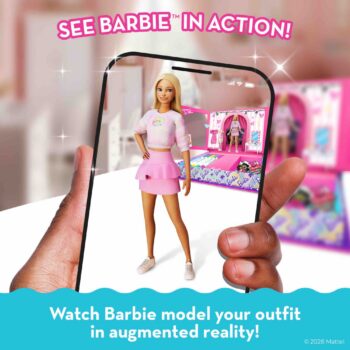
But Abacus has its own bag of tricks, and has created an innovative styling game that adds the power of augmented reality (AR) to bring Barbie styles into the real world.
Developed in partnership with Holotoys, the product allows children to design custom outfits using magnetic fashion pieces, then view a digital version of Barbie wearing the same design on a virtual runway. When a child changes the doll’s outfit, the app updates the digital version to match, the company said.
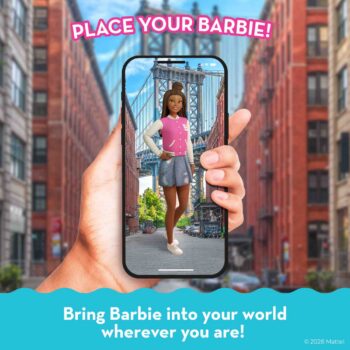
The experience also includes augmented reality features that let children place a digital Barbie into their own surroundings, take photos, and access interactive storytelling content.
 “The way kids play is evolving, and the world’s most iconic brands have an opportunity to evolve with them,” said Steve Rad, founder and CEO of Abacus Brands. “Barbie has inspired generations and we’re excited to build on that legacy by creating an experience that brings hands-on experiences and technology together in an entirely new way.”
The product first launched exclusively on TikTok Shop for early access on July 1, according to Abacus Brands, which said the launch generated strong early sales. It is now available for pre-order, and the company said it will expand to select specialty retailers in the coming weeks.
Designed for children ages 4 and up, the set includes a magnetic Barbie figurine, interchangeable magnetic fashion pieces, an interactive playset and a companion app. It carries a suggested retail price of $29.99.
Abacus Brands has partnered with brands including National Geographic, the Smithsonian, DK, ESPN, Discovery and Bill Nye over more than a decade to create products that combine physical play with digital experiences, the company said.
The product is the latest entry in a growing category of licensed toys that pair physical products with augmented reality apps.
Niantic’s Pokémon Go, released in 2016, is widely credited with bringing augmented reality gaming into the mainstream, drawing families outdoors to find virtual characters layered over real-world locations through a licensed character franchise.
Other toy makers have pursued similar approaches in recent years: Mattel has released a Hot Wheels-branded set that pairs a physical track with an augmented reality racing experience accessed through a companion app, and an earlier Disney Princess playset used a companion app that let children scan marked areas of a toy castle with a smartphone camera to trigger character activities.
Mattel has also partnered with the app Bookful to bring characters including Barbie and Thomas & Friends into augmented reality-enabled children’s books that display animated 3D versions of the characters when scanned with a smartphone.
Abacus Brands said the launch reflects its broader strategy of pairing established brands with new technology to extend play beyond the physical product.