By Gary Symons
TLL Editor in Chief
Licensed apparel for the 2026 FIFA World Cup is more profitable than ever, as prices are up by more than 50% since the 2010 World Cup in South Africa.
Much has been written about the high cost of tickets for World Cup matches, which will be held in host countries Canada, Mexico and the United States.
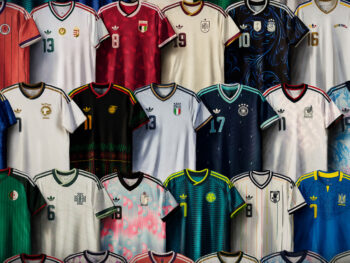
But FIFA and its licensees are also expected to do well with licensed merchandise, and particularly from sales of team uniform replicas. Demand is particularly hot in traditional football markets like Latin America, the UK and Europe.
According to market analysis by Dr. Peter Rohlman, who specializes in football merchandise, the official ‘match versions’ are retailing for as much as €160 or $185 USD (rounded up or down figures, according to latest currency rates), while fans in England, France and Brazil have typically been paying $127 for Nike replica shirts.
Adidas, which won the licensing contracts for Spain, Germany and Scotland, is commanding prices of about $115.50 for replica shirts, and the same goes for Puma, which has the agreement for Portugal.
Kids get a bit of a price break, but Rohlman’s data shows that Nike children’s shirts are going for $98, while Puma charges $92.50, and Adidas $86.70.
All figures were calculated using prices on the European websites of the sports brands themselves, or the relevant football associations.
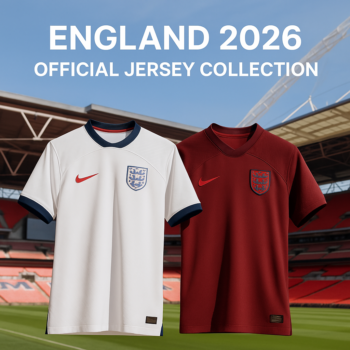
The same is true in the UK, as excitement over a suddenly hot England side has translated into high demand. An adult England stadium shirt now costs $127.20 for a Nike replica, or $180.75 for an England ‘match shirt’.
Fans from Scotland are luckier, as the ‘Tartan Army’s’ kit from Adidas is averaging $100.40 for the replicas, and $160.70 for the match shirts.
In general, Rohlmann says Nike has the highest prices for licensed apparel, while prices for apparel from Adidas and Puma are consistently lower.
As one example, English fans will pay £15 ($20) more on average for the Nike ‘Three Lions’ shirts than Scottish fans will pay for the Tartan Army kit. But then, Scots are known to be quite thrifty.
“The steady increase in prices for fans buying their national team jerseys is striking,” Rohlmann said. He noted that a stadium shirt in 2010 cost 54% less, at $75.10 on average, and even at the 2022 event in Qatar the average price was $104.
Manufacturers note that they have faced their own cost increases, thanks to an array of economic factors.
In a statement to the media, Nike noted, ““We know that any kit price increase matters to fans, and we never take that lightly. We regularly review our product costs to make sure we’re delivering the best possible performance and innovation, while balancing rising material, manufacturing and logistics costs.”
Adidas said that there’s more to pricing than the prices themselves, as the actual products have changed over time, thanks to ongoing innovation. The company says their pricing “reflects the technology, development, and materials behind them. We offer authentic and replica jerseys at different price points and continue to minimise the impact on consumers of rising costs across the industry, including the increasing fees paid to clubs and federations.”
And while prices have risen, Rohlmann says demand remains strong, thanks to the growing global popularity of football. He estimates that fans will buy between 18 million to 23 million shirts during this World Cup, and roughly 80% of those sales will go to the three big licensees; Adidas, Nike, and Puma. That’s a healthy boost to the 14.4 million shirts sold during the 2022 World Cup in Qatar.
Licensing for the World Cup is clearly very profitable, but high demand and high prices also raise a darker side of the business, as major sporting events are typically marked by massive amounts of copyright fraud, and Rohlmann says many fans end up deeply disappointed when they end up buying a fake shirt of poor quality.
The founder of KitLegit, an app that uses AI to verify whether football jerseys are genuine, believes demand for counterfeit apparel will rise this year due to both high prices and the ongoing cost-of-living crisis.
“Some consumers are knowingly buying fakes, but some are being duped,” said Ben Houston. “Consumers think they are getting official product at a slightly reduced cost, when in actual fact they are being sold a fake at a higher price.”